

Tossing marinated meats or saucy dishes into a countertop convection appliance often makes cooks wonder about splatter control and moisture retention. You might find yourself pausing at the counter asking, can you cover food in an air fryer without compromising appliance performance or personal safety? Yes, you can cover food inside an air fryer under specific conditions, but doing so requires strict adherence to thermal safety rules. Unsecured covers can easily float into the intense heating coils above, creating an immediate fire hazard while simultaneously trapping moisture that defeats the crisping purpose of high-velocity hot air.
Knowing how to secure protective materials like heavy-duty aluminum foil or perforated parchment paper ensures that delicate proteins remain juicy without burning. Whether you are preparing tender cuts using our guide to air fryer chicken recipes or testing precise air fryer fish cook times, balancing airflow with food protection is essential. Understanding the clear boundaries between heat-safe wraps, hazardous wax papers, and proper food-weight anchoring will transform how you handle messy foods while preserving appliance longevity.

Pros
- Durable 600D nylon material resists dust, kitchen splatter, and scratches effectively
- Integrated top handle makes slipping the cover on and off fast and convenient
- Easy to clean with a quick wipe down or a gentle cycle in the washing machine
- Folds flat into a compact footprint when your air fryer oven is cooking
Cons
- Must let the air fryer cool down completely before putting the cover on
- Specific 10L oven profile may fit loosely on smaller standard basket-style air fryers
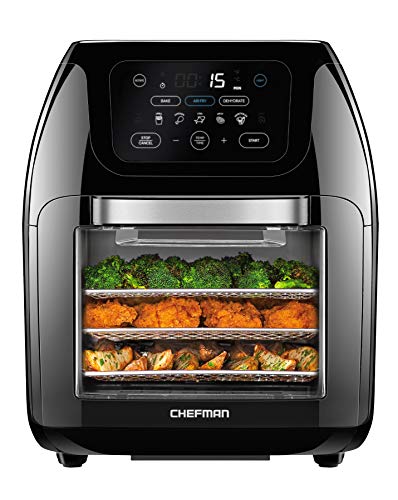
Countertop appliances like multi-cookers, toaster ovens, and air fryers quickly become daily workhorses for busy families and home cooks. However, leaving a larger unit like the CHEFMAN Multifunctional Digital 10L Air Fryer out on the counter leaves it exposed to airborne cooking oil, dust, and everyday kitchen clutter. The CouldyCasi Air Fryer Dust Cover provides a practical solution designed to keep larger digital air fryer ovens clean, protected, and ready for immediate meal preparation.
Crafted specifically to accommodate countertop convection ovens and 10-liter multi-function air fryers measuring up to 14.56 x 13.77 x 15.7 inches, this protective slipcover fits neatly over bulky appliances. For households that cook frequently, airborne grease from nearby stovetop pans can coat appliance buttons, glass viewing windows, and ventilation slots. By keeping the unit covered between uses, you avoid having to scrub the appliance housing every time you want to roast chicken, bake snacks, or air fry frozen fries.
The build quality centers around a durable 600D nylon material. This fabric is water-resistant, oil-proof, and thick enough to guard against scratches from nearby utensils or accidental bumps. It also serves as an effective barrier against pet hair and dust, ensuring your cooking station remains hygienic. The reinforced stitching and robust fabric allow the cover to retain its upright shape when placed over your appliance without sagging loosely.
Daily handling is straightforward thanks to the integrated top handle, which lets you lift the cover off in a single motion when it is time to start cooking dinner. When removed, the lightweight material folds down flat, fitting easily into a kitchen drawer, pantry shelf, or under-cabinet organizer so it never occupies precious counter space. Maintenance is just as simple, requiring only a quick wipe with a damp cloth or an occasional spin in the washing machine for heavier grease spots.
A sensible limitation to keep in mind is temperature safety. Because the cover is made from standard synthetic nylon, you must allow your air fryer oven to cool down entirely after cooking before replacing the cover. Additionally, while it provides a snug fit on 10-liter oven-style units, those with compact 2-quart to 4-quart basket fryers will find the dimensions noticeably roomy.
Overall, this dust cover is a smart, budget-friendly accessory for anyone wanting to protect their investment in a multi-function air fryer oven. It helps preserve the pristine look of your digital display, minimizes deep cleaning chores, and keeps busy kitchen counters looking organized.
Maintaining the CouldyCasi dust cover requires minimal effort compared to scrubbing appliance exteriors. The 600D nylon fabric naturally repels moisture and oil droplets, allowing most common kitchen splatters to wipe clean in seconds using a damp paper towel or microfiber cloth.
For deeper cleaning after prolonged kitchen exposure, the cover is fully machine washable. Its resilient synthetic construction resists fraying and holds its structural shape across repeated wash cycles, making it a reliable protective layer for busy home kitchens.
Designed with dimensions of 14.56 x 13.77 x 15.7 inches, this cover accommodates large-capacity countertop appliances, specifically tailored for the CHEFMAN 10L Digital Air Fryer with rotisserie and dehydrator functions. It also fits similarly sized compact convection ovens and air fryer toaster ovens.
When your air fryer is in active use making dinner or reheating lunch, the flexible fabric collapses flat. This space-saving design ensures apartment dwellers and small-kitchen owners do not lose valuable meal-prep surface area while cooking.

Pros
- Durable 600D nylon material protects against dust, grease, and pet hair
- Convenient top handle makes covering and uncovering your air fryer simple
- Machine-washable design allows for easy maintenance after messy cooking sessions
- Folds completely flat for convenient storage in a kitchen drawer or cabinet
Cons
- Air fryer must cool down completely before placing the cover over the unit
- Sized specifically for 6-quart models and may fit loosely on smaller air fryers
Countertop air fryers have become daily essentials for busy American households making quick weeknight dinners, crispy fries, and reheated leftovers. However, leaving appliances out on the counter exposes them to airborne cooking grease, steam, dust, and pet hair. The CouldyCasi Air Fryer Cover is designed specifically to protect 6-quart countertop units, particularly the COSORI 9-in-1 CAF-DC601 model, keeping your cooking gear clean and ready for mealtime.
Crafted from durable 600D nylon fabric, this protective slipcover creates an effective barrier against common kitchen messes. When searing meats on the stovetop or brewing morning coffee nearby, grease droplets and moisture can settle on your air fryer exterior. This cover helps shield the appliance housing, digital touchscreen, and basket handle from grime, reducing the need for constant scrubbing before you start cooking.
The construction is lightweight yet sturdy, featuring reinforced stitching and an integrated top handle for quick lifting. Its open-bottom design allows it to glide smoothly over the air fryer without snagging on corners. When it is time to air fry chicken wings or roast vegetables, the cover folds flat in seconds, tucking neatly into a kitchen drawer or cabinet without cluttering your workspace.
Maintaining the cover is straightforward for busy home cooks. Everyday spills and light splatters wipe clean quickly with a damp cloth or sponge. For heavier kitchen buildup, the machine-washable fabric is designed to resist fading and wrinkling, making long-term upkeep simple for apartment renters and family kitchens alike.
A realistic factor to keep in mind is temperature safety. The cover should only be placed over the air fryer after the unit has cooled down completely following a cooking cycle. In addition, while sized at 17 by 13.8 by 11.9 inches to fit the COSORI 6-quart model nicely, owners of other air fryer brands should verify their appliance dimensions to ensure a proper fit.
For COSORI 6-quart air fryer owners looking to protect their countertop investment and keep their kitchen organized, this protective cover offers dependable utility. It saves time on wiping down appliances and keeps your favorite cooker in peak condition for daily meal preparation.
Keeping your countertop cooking area tidy is much easier when kitchen appliances are protected from grease and airborne grime. This appliance cover is built with water-resistant 600D nylon that prevents liquids and cooking oils from soaking into your air fryer exterior.
For routine care, a simple wipe with a damp microfiber towel removes surface dust and kitchen splatters. When deeper cleaning is required, the fabric is safe for standard machine washing on a gentle cycle, helping busy families maintain a sanitary cooking environment with minimal effort.
With exterior dimensions of 17 by 13.8 by 11.9 inches, this dust cover is tailored to fit the COSORI 9-in-1 6-quart CAF-DC601 air fryer along with similarly proportioned basket air fryers. Its structured shape neatly conceals the appliance for a streamlined, uniform countertop look.
When dinner prep begins, the collapsible soft-shell design compresses flat for storage. It takes up negligible space in standard pantry shelves, under-sink organizers, or kitchen utility drawers, making it ideal for compact apartments and shared kitchens.
Complete Guide to Covering Food in an Air Fryer
You can cover food in an air fryer, but you must do so with extreme caution, approved materials, and a firm grasp of convection dynamics. Unlike conventional radiant ovens, an air fryer uses a motorized fan to force superheated air through the cooking chamber at high velocity. Placing an unsecured cover or an incompatible wrap over your ingredients blocks this circulation, prevents crisping, and creates a fire hazard if the material contacts the exposed heating coil. Understanding how to tent, wrap, or shield ingredients properly allows you to retain moisture and prevent scorching while keeping your kitchen safe.
How Convection Airflow Dictates Basket Covering Rules
Countertop air fryers operate as compact convection units. An electric coil near the top of the appliance generates intense radiant heat, while a powerful fan circulates that air rapidly around the cooking basket. This continuous convective movement evaporates surface moisture quickly to produce a crisp, browned crust. Placing a solid cover directly over your food disrupts this airflow pattern and alters how heat reaches your ingredients.
Covering ingredients traps rising steam beneath the barrier and softens exterior surfaces. Trapping moisture prevents the Maillard reaction from forming, transforming an air frying cycle into an active steaming process. While steaming suits tender seafood or dense root vegetables, it ruins breaded cutlets, fries, and chicken wings. Cooks should only cover food when their main objective is moisture preservation, gentle reheating, or protecting delicate toppings from harsh direct heat.
Upward draft from the high-velocity fan creates another mechanical challenge. Because the cooking chamber is small, lightweight items lift easily when caught in the convective current. Unweighted foil or parchment paper can drift into the glowing upper heating element within seconds. Once materials contact the heating coil, they can melt or ignite, creating severe appliance damage and safety hazards.
Approved Heat-Resistant Materials for Covering Food
Heavy-duty aluminum foil remains the most adaptable material for covering food inside an air fryer. Standard kitchen foil easily withstands temperatures above 500 degrees Fahrenheit, which exceeds the thermal ceiling of standard domestic units. When using foil, crimp the edges firmly around the food or the rim of an oven-safe dish. Always make sure the weight of dense ingredients holds the foil down so circulating air cannot tear it loose.
Perforated parchment paper sheets provide a breathable shield against direct top-coil heat. Quality unperforated parchment resists heat up to roughly 425 degrees Fahrenheit, but solid sheets block vital vertical airflow. Perforated parchment features small cutouts that let convection air pass through while shading delicate foods from scorching. Just like foil, parchment paper must always be weighed down by ingredients to prevent fan displacement.
Oven-safe silicone lids and small silicone baking pans offer another safe shield during cooking cycles. Food-grade silicone handles temperatures up to 450 degrees Fahrenheit and has enough physical mass to resist fan currents. Placing a small silicone lid over a ramekin lets you melt cheese or warm sauces without blowing ingredients around the basket. Always maintain clear space around the sides of silicone containers so hot air continues moving freely.
Hazardous Materials That Must Never Enter the Cooking Chamber
Wax paper represents a severe fire hazard inside an air fryer and must never be used. Many home cooks mistake wax paper for parchment paper, but their heat tolerances differ drastically. Wax paper carries a paraffin coating that melts between 135 degrees Fahrenheit and 150 degrees Fahrenheit. At typical air frying temperatures of 375 degrees Fahrenheit to 400 degrees Fahrenheit, the wax melts, smokes, and easily ignites near the upper heating coil.
Plastic food wraps, plastic containers, and thin storage lids must also stay out of the appliance. Thin plastics melt rapidly at low temperatures and fuse to hot metal basket surfaces. Melted plastic ruins nonstick coatings and contaminates food with harmful chemical compounds. Even microwave-safe plastic covers lack the heat tolerance needed for high-velocity dry convection cooking.
Paper towels, paper plates, and cocktail napkins pose an immediate combustion risk. Although paper towels are common in microwave cooking, the swift air currents inside an air fryer lift light paper instantly. When dry paper touches an active electric element, it can ignite in seconds. If you need to manage grease, use perforated silicone liners, metal drip trays, or heavy-duty foil rather than combustible paper products.
Strategic Culinary Reasons to Cover Food During Cooking
Tenting proteins with aluminum foil prevents outer surfaces from charring before thick centers finish cooking. Dense poultry cuts, bone-in pork chops, and small roasts require sufficient cooking time to reach safe internal temperatures. In a compact basket, exposed exteriors can dry out before the center cooks through. Shielding the top with foil during the first half of cooking deflects intense radiant heat, allowing the core to warm before you uncover and crisp the skin.
Covering food also protects delicate toppings and shredded cheeses from high fan speeds. Convection air can easily blow lightweight seasonings or shredded mozzarella off food and onto the bottom tray. Tenting food loosely with foil for the first two to three minutes allows cheese to soften and stick to the surface. Once the cheese melts into a single layer, you can remove the cover so the top coil browns the surface nicely.
Reheating delicate leftovers like lasagna, meatloaf, or pastries works better with a temporary cover. Direct convective heat can dry out leftover proteins and harden pasta edges before the interior warms thoroughly. Placing a foil tent over the serving keeps steam trapped, warming the food evenly without moisture loss. Uncovering the food during the final two minutes crisps the edges without making the entire dish tough.
The Anchor Rule: Preventing Fatal Heating Element Contact
The most important safety guideline for covering food is ensuring that every liner or cover remains firmly anchored. The motorized fan generates strong air movement designed to circulate heat efficiently. This force can lift unweighted foil edges and loose parchment paper with ease. Once any material contacts the exposed upper heating coil, combustion can occur almost instantly.
Never run a preheat cycle with empty foil sheets or loose parchment resting in the basket. An empty basket provides zero downward weight to keep covers stationary. Cooks who preheat empty liners often end up with charred paper, burning odors, or damaged heating coils. Always place ingredients directly on liners, or crimp foil covers tightly around food portions, before switching on the power.
Make sure any cover leaves sufficient clearance beneath the upper heating element. Most air fryer baskets require at least three to four inches of vertical space between the food and the heating coil. If a piece of foil stands too tall, it can touch the coil when you push the basket closed. Mold the foil closely around your food to keep the overall profile low and stable.
Cooking in Foil Packets Versus Open Basket Frying
Wrapping ingredients into sealed aluminum foil packets creates a moist cooking environment known as parcel cooking. Sealing fish fillets, shrimp, or seasoned vegetables inside foil locks in natural juices, herbs, and aromatics. Convection heat warms the exterior packet, boiling trapped liquids and steaming the ingredients tenderly. This technique prevents delicate proteins from drying out and keeps basket cleanup remarkably simple.
Foil packet cooking produces tender textures, but it prevents surface browning. If you want crunchy breading, blistered skin, or roasted edges, an enclosed foil packet cannot achieve those textures. You can solve this by cooking the packet until the protein is nearly done, cutting the top foil open carefully, and air frying uncovered for three to five minutes. This hybrid method gives you juicy meat with a pleasantly browned top.
Leave a modest pocket of air inside each packet so steam can circulate without tearing the seams. Place packets flat on the crisper plate to keep them from sliding when you pull the drawer out. Exercise caution when opening cooked packets, as hot steam vents rapidly and can cause painful kitchen burns. Use silicone-tipped tongs to open the foil safely.
Food Safety Benchmarks and Internal Temperature Guidelines
Covering food changes how quickly heat moves into the center of ingredients, making cook times harder to predict. Visual checks alone cannot confirm whether wrapped or tented meats are cooked thoroughly. Home cooks must rely on a calibrated instant-read digital food thermometer to verify doneness. Checking core internal temperatures prevents undercooking while avoiding dry, overcooked proteins.
USDA food safety guidelines outline minimum safe internal temperatures for all cooked proteins. Chicken breasts, thighs, wings, and ground poultry must reach an internal temperature of 165 degrees Fahrenheit. Ground beef, pork, and lamb require a core temperature of 160 degrees Fahrenheit. Whole cuts of pork, beef steaks, and finfish must reach 145 degrees Fahrenheit with a mandatory three-minute rest before slicing.
Carryover cooking also affects tented proteins once you remove them from the appliance. Trapped residual heat beneath a foil cover continues cooking meat fibers for several minutes on the counter. Insert your thermometer probe into the thickest section away from bones or cooking trays. If the protein is within a degree or two of safety, keep the cover crimped for three minutes to let carryover heat finish the job.
Basket Style Versus Oven Style Air Fryer Considerations
Your appliance design affects how easily and safely you can cover food during cooking. Pull-out basket fryers feature deep drawers that contain ingredients well, but their vertical clearance is limited. Because food sits close to the top heating element, covers must stay low and tightly crimped. Any loose edge can easily rise toward the fan and coil during operation.
Countertop toaster-oven style models feature wider interiors and adjustable rack levels for greater versatility. You can place covered pans on lower rack slots to maintain safe clearance from top heating elements. Cooks managing complex family meals with dual-zone air fryer models can cover food in one basket for gentle warming while running the second zone uncovered to crisp complementary sides simultaneously.
Appliance care extends beyond cooking cycles to long-term countertop protection. External dust covers made from sturdy 600D nylon help shield idle convection appliances from airborne kitchen grease, dust, and pet hair. Always allow the entire appliance to cool down completely before putting on a fabric cover. Storing your fryer under a clean cover keeps heating vents free of debris between uses.
Splatter Control and Post-Cooking Appliance Care
Covering high-fat foods helps manage splatters that strike the upper heating element and generate white smoke. Fatty foods like pork belly or sausages can spit hot grease directly into heating coils during vigorous cooking. Placing a loose, perforated splatter sheet or foil tent over the basket stops grease droplets while letting hot air circulate. This simple step keeps your kitchen air clearer during high-fat cooking sessions.
Grease collecting in the bottom pan can scorch if it remains unmanaged throughout cooking. Adding a tablespoon of water beneath the crisper plate helps cool dripping fat and reduces excess smoke. When handling stubborn grease and burnt sauce residue after covered cooking, follow reliable steps for degreasing an air fryer basket to protect nonstick surfaces and maintain appliance hygiene.
Clean the basket and inspect the upper heating element area regularly to keep your air fryer working at peak efficiency. Grease deposits left on heating coils reduce heat transfer and produce lingering odors over time. Wipe cool interior surfaces with a soft damp cloth and mild dish soap after messy meals. Mastering safe covering habits alongside regular cleaning guarantees dependable, flavorful meals every time you cook.


Write Your Review
No reviews yet. Be the first to share your experience!