


Hot bubbling oil demands respect, precision, and the right heat source to turn fresh cut potatoes or battered proteins into crisp culinary perfection. Deciding which is better gas or electric deep fryer comes down to where you cook, how much food you plan to submerge, and how quickly your equipment recovers heat after cold ingredients hit the vat. While electric units offer convenient countertop operation for indoor family dinners, propane setups deliver raw combustion power designed to handle massive backyard gatherings. Home cooks who explore dual zone cooking appliances often appreciate how dedicated heating zones create distinct textural results, and deep fryers demand an identical focus on thermal management.
Temperature recovery dictates the entire eating experience because a sudden drop in oil heat forces food to absorb excess grease rather than forming an immediate crisp barrier. Whether preparing family batches of fries or researching larger chicken cooking methods, understanding how each energy source handles heat dissipation prevents soggy breading and undercooked meat. Electric models excel at steady indoor heat retention with automated safety cutoffs, while outdoor gas burners slice through massive volumes of oil in minutes. Evaluating your cooking environment, target batch sizes, and cleanup tolerance will reveal the ideal setup for your kitchen or outdoor patio.


Pros
- Compact 1-quart footprint fits easily on small countertops and tucks into standard cabinets
- Uses only four cups of oil, minimizing oil waste compared to standard full-size fryers
- PFAS-free ceramic nonstick surface prevents food sticking and wipes clean easily
- Snap-on lid allows convenient oil storage inside the fryer between uses
- Includes a dedicated slotted scoop for quick food lifting and draining
Cons
- Fixed automatic temperature control does not allow manual heat adjustments for specialty recipes
- Small 1-quart capacity is designed for snacks and couples rather than large family meals
- Base housing cannot be submerged in water or washed in a dishwasher
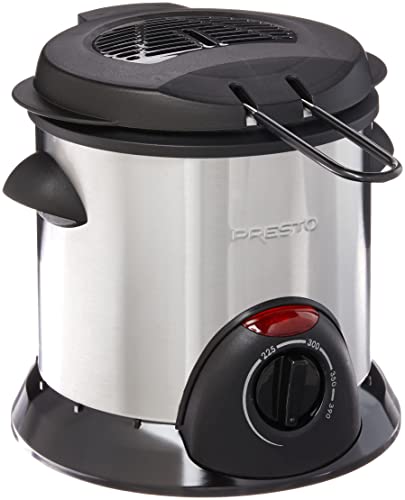
The Presto FryDaddy Electric Deep Fryer is a classic, compact countertop cooking appliance designed for anyone who loves golden, restaurant-style fried food without dealing with a massive vat of oil. With its tidy 1-quart capacity, this unit is well-suited for solo cooks, couples, apartment dwellers, and college students looking to whip up quick batches of french fries, chicken tenders, or mozzarella sticks.
In terms of everyday frying performance, the unit relies on heavy cast aluminum construction paired with an automatic internal thermostat. This design promotes rapid preheating and consistent oil temperature recovery between batches, helping foods crisp evenly without soaking up excess oil. Whether you are frying up frozen snacks for movie night or making fresh shrimp and onion rings from scratch, the preset heating system maintains the target frying temperature automatically without the need for manual dial monitoring.
The build features a durable cast aluminum body coated inside and out with a ceramic nonstick finish that is completely PFAS-free. This surface helps prevent batter and crumbs from sticking tightly to the interior walls. Rather than using a bulky wire basket that can be cumbersome to wash and store, Presto includes a custom slotted scoop designed to lift, drain, and serve your fried foods straight to the plate.
Setup and countertop placement are straightforward thanks to the modest dimensions of 8.38 by 8.13 by 7.38 inches and a lightweight 3-pound body. One of its most practical features is the snap-on storage lid. After the oil cools down completely, you can simply snap the cover on and store the oil directly inside the fryer for future use, eliminating messy oil transfers and keeping kitchen counters odor-free.
There are a few natural trade-offs with such a streamlined design. Because the thermostat is preset, you cannot customize the frying temperature for delicate items or high-heat specialty recipes. In addition, the compact 1-quart capacity is built for one to two servings at a time, making it less practical for cooking large family dinners. The integrated heating element also means the unit cannot be submerged in water or placed in a dishwasher.
For budget-conscious home cooks, small-kitchen households, and anyone who wants an effortless way to make crispy fried treats using just four cups of oil, the Presto FryDaddy remains a dependable, space-friendly countertop solution. It delivers authentic crispness, straightforward operation, and mess-free oil storage in a compact package.
The Presto FryDaddy is specifically engineered around an efficient four-to-four ratio, frying four generous servings of food using only four cups of cooking oil. This setup significantly reduces oil waste compared to traditional deep fryers that require large quantities of oil just to reach the minimum fill line.
The included snap-on lid turns the fryer into its own storage container between cooking sessions. Once the oil has completely cooled, sealing the lid prevents spills and traps lingering cooking odors, allowing you to store the fryer on a pantry shelf or counter without having to drain and strain the oil after every single meal.
Cleaning the FryDaddy is simplified by its PFAS-free ceramic nonstick coating, which covers both the interior pot and the exterior housing. Food residue and oil droplets release easily, meaning a damp cloth with mild dish soap is usually all that is needed to wipe down the inside after the oil has been emptied.
Because the electrical heating elements are built directly into the cast aluminum base, the unit must never be submerged in water. The included slotted scoop is easy to hand wash in the sink, making post-snack cleanup fast and straightforward for busy weeknights.

Pros
- Rapid 1500W heating element recovers oil temperature efficiently between batches
- Compact 2-liter capacity is well-suited for small kitchens, dorms, and single-serve snacks
- Locking lid with viewing window minimizes oil splatter and keeps cooking visibility high
- Dishwasher-safe frying basket and removable cord make cleanup and storage straightforward
Cons
- 2-liter capacity is too small for large family dinners or frying whole cuts of poultry
- Deep-frying requires storing and disposing of cooking oil compared to hot-air alternatives
- Exterior housing can get warm to the touch during extended high-temperature cooking sessions
The OVENTE 2L Electric Deep Fryer is a compact countertop cooking appliance designed for home cooks who appreciate the unmatched crunch and flavor of traditional oil frying. With a modest 2-liter (68-ounce) oil reservoir and a space-efficient rectangular profile, this unit is tailor-made for apartment renters, college students, couples, and smaller households where counter real estate is at a premium. It provides a dedicated frying solution that avoids the mess and temperature fluctuations often experienced when frying in standard stovetop pots.
Equipped with a 1500-watt heating element, this fryer heats oil quickly and provides steady temperature recovery when frozen items are lowered into the bath. The adjustable rotary dial covers a range from 275°F to 375°F, giving you the flexibility to prepare everything from delicate funnel cakes, beignets, and doughnuts to high-heat items like French fries, chicken tenders, mozzarella sticks, and egg rolls. Dual LED indicator lights keep you informed by glowing red during the preheating phase and switching to green as soon as your selected frying temperature is reached.
The physical construction combines brushed stainless steel housing with practical safety features. The top cover locks firmly in place to prevent dangerous oil pops and splattering, while the clear glass viewing window allows you to monitor food browning without releasing heat. An integrated lid filter works to capture excess grease vapor and minimize lingering food odors in open-concept living areas. For added kitchen safety, the unit includes cool-touch side handles and a quick-disconnect breakaway power cord that detaches instantly if snagged.
Daily operation and storage are straightforward thanks to the lightweight 5.52-pound build and compact dimensions of 13.75 by 8.25 by 8.25 inches. The wire frying basket features a resting hook for draining excess oil back into the reservoir before serving. Once cooking is finished and the oil has completely cooled, the removable basket can go straight into the dishwasher, while the sleek brushed metal exterior easily wipes down with a damp cloth.
While this appliance excels at compact convenience, prospective buyers should keep realistic volume limits in mind. A 2-liter capacity is ideal for single portions or side dishes for two, but preparing game-day wings or family-sized meals will require frying in sequential batches. Additionally, users must factor in standard oil maintenance and disposal, as deep frying naturally involves more hands-on oil management than air frying.
For anyone seeking an affordable, dedicated small-batch fryer that produces restaurant-quality crispiness without dominating the kitchen counter, the OVENTE FDM2201BR is a practical and dependable choice. It offers quick heat-up times, solid safety considerations, and effortless control for satisfying comfort food cravings on demand.
Consistent oil temperature is essential for achieving golden, crispy exteriors without making food greasy, and this unit delivers reliable heat management via its 1500-watt submerged coil design. The front-mounted thermostat dial allows smooth adjustment between 275°F and 375°F, allowing home cooks to dial in the perfect heat setting for delicate seafood, battered vegetables, or dense frozen appetizers.
Safety is a standout feature on this countertop model. The magnetic breakaway power cord detaches with minimal resistance if accidentally bumped, helping prevent dangerous counter spills. Combined with the secure locking lid, cool-touch exterior handles, and distinct red and green indicator lights, the unit provides a protected, user-friendly frying experience for cooks of any experience level.
With a narrow width of just 8.25 inches and an overall length under 14 inches, this fryer fits neatly alongside other appliances or tucks away into standard kitchen cabinets between uses. Its brushed stainless steel finish resists stubborn fingerprints and adds a clean, modern aesthetic to any apartment or galley kitchen setup.
Post-cooking maintenance is simplified by the dishwasher-safe chrome-plated frying basket and smooth interior surfaces. Built-in lid filters catch airborne oil droplets during cooking, significantly reducing countertop grease mist and making final surface wipe-downs fast and painless.
Thermal Performance and Practical Realities of Gas Versus Electric Fryers
Choosing the proper frying apparatus requires matching heating mechanics to your specific cooking environment, portion demands, and cleanup expectations. An electric deep fryer utilizes internal resistance heating elements submerged directly in cooking oil or cast into the base of the pot, providing precise, automated heat regulation for indoor countertop recipes. In contrast, a gas deep fryer relies on high-output propane or natural gas burners that fire external heat into a heavy-duty tub or through heat-exchange tubes, producing immense thermal energy suited for outdoor batch cooking. Understanding how these fuel types interact with oil volumes, recovery cycles, and kitchen safety protocols guarantees crispy results while preventing dangerous grease mishaps.
Heat Transfer Dynamics and Oil Temperature Recovery
Submerged electric elements provide direct conductive heat transfer because oil surrounds the element coils completely. This design delivers efficient energy absorption, minimizing heat loss through exterior housing during standard family dinner preparation. Countertop units rated between 1500 and 1800 watts maintain stable temperatures between 275 degrees Fahrenheit and 375 degrees Fahrenheit under moderate food loads. However, the limited wattage available from standard residential 120-volt outlets restricts how quickly an electric fryer can restore lost heat once chilled ingredients submerge.
Oil temperature recovery represents the most vital technical metric during deep frying because cold foods instantly pull thermal energy from the cooking bath. When you drop frozen french fries or breaded chicken cutlets into 375-degree oil, the temperature can rapidly plummet by 50 to 70 degrees. If the heating system lacks sufficient power to drive the oil back up to target temperature within two to three minutes, the food exterior fails to sear instantly. This delayed recovery causes porous breading to absorb excess oil, producing limp, greasy textures instead of a light, shattering crunch.
Gas fryers solve the recovery dilemma through sheer thermal brute force. A dual-burner propane station generating 300,000 British Thermal Units (BTUs) outputs roughly sixty times the raw energy of a typical 1500-watt electric element. This immense power transfers rapid heat into heavy stainless steel tubs, allowing huge volumes of cooking oil to rebound almost immediately after large batches of cold food enter the vat. For high-volume cooking where multiple pounds of cold poultry or seafood drop sequentially, gas combustion provides an aggressive heat recovery profile that electric countertop units cannot replicate.
Indoor Safety Protocols and Operating Environments
Kitchen safety dictates clear boundaries between where gas and electric fryers can operate. Propane deep fryers generate dangerous carbon monoxide emissions and create open flame hazards that make them strictly illegal and unsafe for indoor residential kitchens. High-output outdoor gas fryers require well-ventilated open-air environments, firm level ground, and non-combustible clearance away from roof overhangs, wooden decks, or vinyl siding. A sudden boilover from an overloaded gas fryer can ignite violently if hot oil splashes onto an open burner flame.
Electric deep fryers are engineered specifically to mitigate indoor kitchen risks through integrated electrical and structural safeguards. Countertop models feature magnetic breakaway power cords designed to detach instantly if someone snags the cord, preventing boiling oil from tipping off the counter. Enclosed locking lids with viewing windows allow cooks to monitor bubbling ingredients without risking hot oil splatter across counters or skin. Built-in charcoal and mesh grease filters inside electric fryer lids trap volatile oil aerosols, keeping indoor air cleaner and reducing lingering frying odors.
Automatic thermal limit switches provide another critical safety layer in modern electric frying appliances. If the oil level drops too low or the thermostat fails, internal thermal cutoffs shut off the power element before oil reaches its flashpoint, which typically sits around 425 to 450 degrees Fahrenheit depending on the oil variety. Outdoor propane rigs rely primarily on manual needle valves and dial thermometers to track temperature, requiring constant human vigilance to prevent scorching oil or creating runaway flare-ups.
Oil Volume Capacity and Batch Cooking Demands
Small batch cooking represents the true strength of compact electric fryers. Many home kitchens only require occasional four-serving batches of onion rings, french fries, or tempura vegetables. Units like the Presto FryDaddy utilize a cast aluminum reservoir that operates on just four cups of oil, minimizing the volume of expensive oil needed for a single meal. Countertop electric fryers with 2-liter capacities hold approximately 68 fluid ounces of oil, offering sufficient space for small family dinners without taking up excessive counter real estate.
Outdoor gas deep fryers operate on an entirely different scale, accommodating large-format catering, tailgate gatherings, and seasonal celebrations. Large propane carts feature stainless steel tubs holding up to 12 gallons of oil or water, providing sufficient depth to submerge multiple whole turkeys or huge batches of battered fish. Raising and lowering massive fry baskets filled with dozens of pounds of chicken presents severe burn hazards if attempted by hand. To counter this risk, heavy-duty gas carts incorporate Santa Maria-style overhead hand crank lift systems, allowing cooks to smoothly raise and lower massive mesh baskets without splashing boiling oil.
Overcrowding remains a constant risk across both appliance categories, though the mechanical consequences differ. In a compact electric fryer, crowding food drops oil temperatures drastically, turning batter into a gummy paste that fuses to the wire basket. In a massive outdoor gas tub, overloading with ice-glazed food can cause sudden foaming and massive oil displacement that overflows the tub rim. Maintaining appropriate food-to-oil volume ratios ensures safe boiling action, rapid thermal circulation, and uniform golden browning across every piece.
Energy Efficiency and Operational Economics
Electrical efficiency and fuel consumption present contrasting financial considerations for regular deep frying. Submerged electric heating elements transfer roughly 85 to 90 percent of their electrical energy directly into the oil bath because the heating coils make direct surface contact with the liquid. Standard household electrical circuits power these units economically, costing only a few cents per frying session. For cooks who prepare small quantities of fried snacks once or twice a week, electric operation represents the most energy-efficient and affordable indoor choice.
Gas burners suffer from lower thermal transfer efficiency because a substantial amount of heat escapes around the exterior curved walls of the frying pot into the surrounding outdoor air. Atmospheric propane burners typically transfer between 35 and 50 percent of their combustion energy into the cooking liquid. Operating heavy propane fryers requires purchasing portable twenty-pound propane tanks, monitoring pressure regulators, and refilling fuel tanks periodically. While propane delivers unrivaled raw power, the fuel cost per hour of active operation remains noticeably higher than standard residential electricity.
Beyond utility bills, the ongoing cost of cooking oil dominates deep fryer ownership economics. A compact electric fryer requiring less than a quart of peanut oil or canola oil costs very little to charge and refresh. Conversely, filling a 12-gallon commercial propane cart requires nearly one hundred pounds of cooking oil, representing a significant upfront investment before cooking even begins. Unless you routinely cook for massive crowds, maintaining and storing large reservoirs of outdoor frying oil creates substantial ongoing storage and disposal expenses.
Culinary Texture, Moisture Retention, and Food Safety
Crispy exterior texture depends entirely on rapid thermal crust formation, which seals surface starches and halts moisture migration from the protein core. When food enters oil maintained between 350 degrees Fahrenheit and 375 degrees Fahrenheit, surface water vaporizes instantly into steam. This escaping steam creates an outward pressure barrier that prevents surrounding oil from soaking deep into the batter. Gas fryers maintain this vital outward vapor barrier effortlessly during heavy loads because their burners pump continuous high-BTU heat into the vat.
Food safety guidelines established by the USDA require specific internal temperature benchmarks to eliminate foodborne pathogens. Poultry such as fried chicken breasts and wings must achieve a minimum internal temperature of 165 degrees Fahrenheit. Finfish, pork chops, and whole beef cuts require an internal reading of 145 degrees Fahrenheit, followed by a three-minute rest period. When preparing delicate battered seafood, following delicate seafood preparation guidelines helps home cooks time the cooking window accurately, ensuring flaky tenderness without turning the batter into a greasy shell.
Electric fryers with adjustable thermostats spanning 275 degrees Fahrenheit to 375 degrees Fahrenheit provide precise control over delicate confections and thick proteins. Frying dense doughnuts or funnel cakes requires lower temperatures around 325 degrees Fahrenheit so dough cooks completely through without scorching exterior sugars. Quick-cooking items like thin potato chips or calamari thrive at 375 degrees Fahrenheit. The thermostatic dial and indicator lights on electric units help cooks hold these narrow temperature bands far more reliably than adjusting manual gas control valves on outdoor burners.
Maintenance, Oil Filtration, and Equipment Longevity
Post-cook maintenance separates casual frying from exhausting kitchen chores. Compact electric fryers with nonstick ceramic coatings or removable oil reservoirs allow quick oil pouring once the pot cools completely. Small countertop baskets and removable lids fit easily into standard kitchen sinks or dishwashers, making greasy cleanup manageable within fifteen minutes. Storing a compact unit with its snap-on storage lid allows cooks to keep clean oil sealed directly inside the fryer for several weeks without countertop odor.
Cleaning commercial-style gas frying stations requires heavy-duty procedures tailored to large fluid volumes. Draining twelve gallons of spent oil is impossible without an integrated ball-valve drain port mounted low on the cart frame. Once the vat is emptied, cooks must scrub away baked-on carbonized grease from stainless steel walls and burner baffles. Using specialized degreasing methods for cooking equipment helps break down stubborn polymerized fats without scratching bare metal finishes or damaging high-heat silicone seals.
Material construction influences how well each fryer withstands repeated high-heat cycles. Heavy cast aluminum pots and brushed stainless steel housings on electric models resist warping while sitting quietly on indoor shelves. Outdoor propane fryers feature welded structural steel frames, heavy powder coating, and thick stainless tubs built to resist wind, rain, and intense open flame heat. Checking CSA-approved propane hoses and brass fittings for leaks using soapy water mixtures remains an essential maintenance ritual every time you hook up a fuel cylinder.
Making the Right Selection for Your Kitchen Needs
Selecting between gas and electric frying hardware ultimately depends on where your culinary life takes place. If your cooking focuses on weeknight dinners, crispy chicken tenders for the kids, occasional batches of french fries, or small holiday appetizers, an electric deep fryer is the undisputed winner. Its compact footprint, indoor safety features, magnetic breakaway cord, and minimal oil requirement make it practical, safe, and clean for everyday home use.
If your culinary ambitions revolve around feeding massive crowds, hosting backyard seafood boils, frying Thanksgiving turkeys, or catering festival events, an outdoor propane deep fryer cart provides the uncompromising thermal power you require. The vast oil capacity, dual burners pumping 300,000 BTUs, and smooth basket lift systems eliminate the bottleneck of small-batch cooking. Matching the appliance to your physical location, crowd size, and safety comfort level guarantees crisp, restaurant-quality results every time you heat the oil.






Write Your Review
No reviews yet. Be the first to share your experience!